Blog
Rugged vs Ruggedized: The Difference That Decides Reliability

The word “rugged” gets used often in the defense and industrial computing industry, but not always with the same meaning. Many vendors sell systems they call rugged when in reality they are only ruggedized. That small distinction often determines whether a system will perform reliably in the field or break down under pressure. According to the U.S. Government Accountability Office, equipment failures account for nearly 40 percent of unplanned downtime in military operations, and much of it stems from hardware that was not designed for the realities of harsh environments.
Rugged vs Ruggedized: Rugged devices are built from the ground up to operate in extreme environments and meet strict durability standards, while ruggedized devices are standard systems modified to withstand moderate environmental stress.
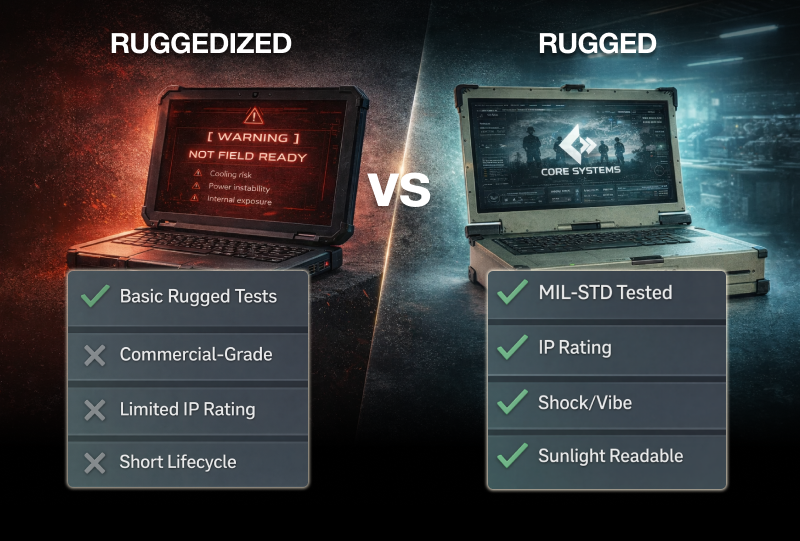
Ruggedized systems, by contrast, are commercial-grade devices that have been enhanced with protective features to better withstand environmental stress factors, but they are not always designed to meet full military or industrial testing standards.
Studies published by IEEE show that over 60 percent of electronic failures in extreme environments are tied to connectors, cooling systems, and enclosures. These are the very areas where ruggedized solutions often cut corners, leading to malfunctions once conditions become extreme.
Modified COTS
Purpose-Built

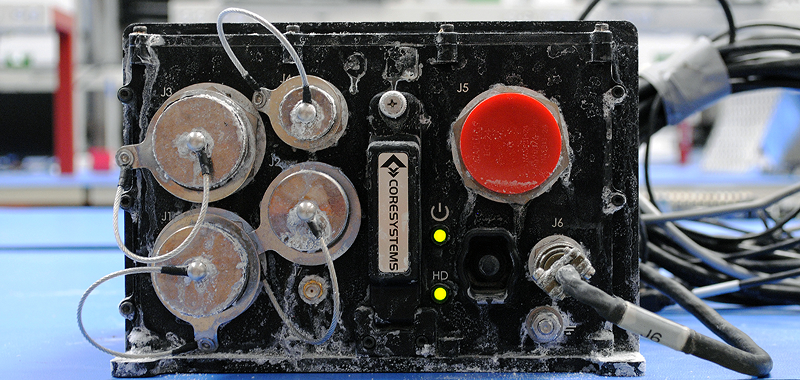
Rugged systems are purpose-built to survive extreme conditions and are typically validated against standards such as MIL-STD-810, a U.S. military testing protocol that evaluates resistance to shock, vibration, temperature, and humidity.
In addition, rugged devices often carry high Ingress Protection (IP) ratings, which define resistance to dust and water exposure.

True rugged systems are fundamentally different. They are engineered from the start with the environment in mind. Every board, connector, and interface is selected and tested to withstand heat, vibration, dust, salt, and electromagnetic interference. Durability is not bolted on later. It is built into the DNA of the system. In fact, VDC Research reports that organizations adopting purpose-built rugged systems experience up to 46 percent fewer field failures compared to those using modified commercial equipment.
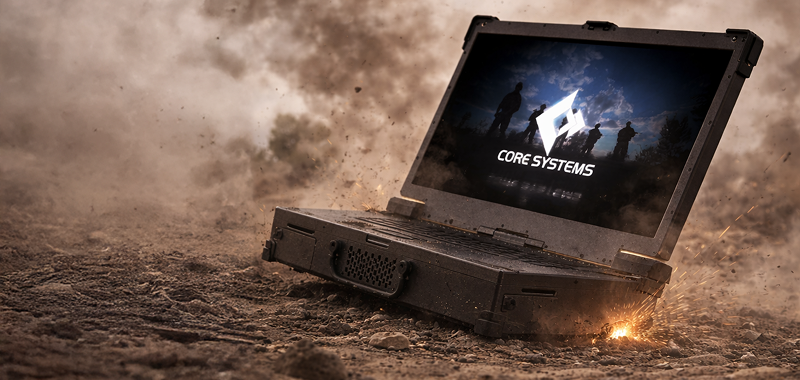
These systems are specifically built to withstand continuous shock and vibration, which are common in mobile and industrial deployments.
The key difference between rugged and ruggedized devices lies in their design philosophy. Fully rugged systems are engineered from the ground up to meet strict durability certifications, while ruggedized devices are adapted from standard commercial designs with added protective measures.
The consequences of this distinction are significant. Organizations relying on ruggedized products often face higher failure rates, costly downtime, and shortened service life. For defense operations, a system breakdown can compromise mission readiness. For energy and industrial environments, it can halt production and erode profitability. Research shows that downtime costs an average of $260,000 per hour, highlighting how even small weaknesses in hardware design create outsized impacts.

By contrast, systems designed as rugged from the ground up consistently perform under sustained stress. They extend service life, reduce emergency repairs, and deliver reliability in places where failure is not an option.
Industries such as manufacturing, transportation, and defense applications rely on rugged computing systems to maintain performance in harsh operating environments.
Ruggedized systems may look the part, but they are not engineered to last. True rugged systems begin with the environment in mind, not as an afterthought. At Core Systems, our engineers design every detail to survive heat, vibration, dust, and salt — not only in controlled test chambers but in the unpredictable conditions of the real world. That is why our customers trust their systems to deliver mission after mission.
When the stakes are high, ruggedized is not enough. Organizations need technology that is engineered for the field from the inside out. At Core Systems, rugged is not just a marketing term. It is a design philosophy backed by engineering discipline and proven in the world’s harshest environments.
What is the difference between rugged and ruggedized?
A rugged device is purpose-built for harsh environments and is designed to withstand extreme conditions such as shock, vibration, moisture, dust, and temperature swings. A ruggedized device is typically a commercial-grade system that has been reinforced or modified for improved durability, but not always to the same level as a fully rugged solution.
Are ruggedized laptops worth it?
Ruggedized laptops are often worth it for organizations that need more protection than a standard laptop can offer, but do not require a fully rugged system. They can be a cost-effective option for moderate field use, vehicle use, and light industrial work. For consistently harsh environments, a fully rugged laptop is usually the better fit.
What does MIL-STD-810 mean?
MIL-STD-810 is a military testing standard used to evaluate how equipment handles environmental stress such as vibration, shock, humidity, and temperature extremes. In product marketing, it generally indicates that the device has undergone durability-related testing, though testing scope can vary by manufacturer and product.

What is the difference between commercial-grade laptops and military-grade rugged laptops?
Commercial-grade laptops are built for everyday use in controlled environments and are not designed to handle significant environmental stress. They may be vulnerable to damage from drops, vibration, dust, moisture, and temperature fluctuations.

Rugged laptops, such as the Core Systems Rugged RPS417, are engineered specifically for harsh military environments. They often include features like shock-mounted components, sealed ports, and resistance to environmental factors that can disrupt or damage standard devices.
For organizations operating in industries such as field service, defense, utilities, or manufacturing, rugged laptops provide greater reliability and reduced downtime compared to commercial alternatives.