Blog
Why Rugged GPU Platforms are Critical for Modern C2 Operations

Modern military operations generate unprecedented amounts of data. Intelligence feeds, ISR sensors, unmanned systems, electronic warfare assets, cyber operations, and mission systems all contribute to an increasingly complex operational picture. The challenge is no longer obtaining information, it’s processing and acting on it quickly enough to maintain your advantage in the field.
As Command and Control (C2) environments evolve, traditional compute architectures often struggle to support the demands of artificial intelligence, machine learning, sensor fusion, and real-time analytics. Rugged GPU platforms are emerging as a critical technology for bridging this gap, enabling advanced AI-driven capabilities directly at the tactical edge.
Historically, computationally intensive workloads were sent to centralized data centers or cloud environments for processing. While effective in permissive environments, this model presents significant limitations for military and expeditionary operations.
Operational environments frequently face:
When mission-critical decisions depend on real-time intelligence, transmitting large volumes of sensor data to remote locations can introduce delays the military cannot afford.

Rugged GPU platforms address this challenge by bringing high-performance AI processing directly to the point of need.
Historically, computationally intensive workloads were sent to centralized data centers or cloud environments for processing. While effective in permissive environments, this model presents significant limitations for military and expeditionary operations.
GPUs were originally designed for rendering complex graphics, but their massively parallel architecture makes them exceptionally well-suited for AI and machine learning workloads.
Compared to traditional CPUs, GPUs can simultaneously process thousands of calculations, dramatically accelerating tasks such as:
For modern C2 operations, this translates into faster analysis of mission data and more actionable intelligence delivered to decision-makers.
Collecting data is only half the battle. Today’s missions rely on countless sensors across land, sea, air, space, and cyber, creating more information than operators can realistically process in real time.
Examples include:
Individually, these systems provide valuable information. Combined, they create a comprehensive operational picture. However, that picture only becomes clear if the underlying compute infrastructure can process and correlate the data fast enough.
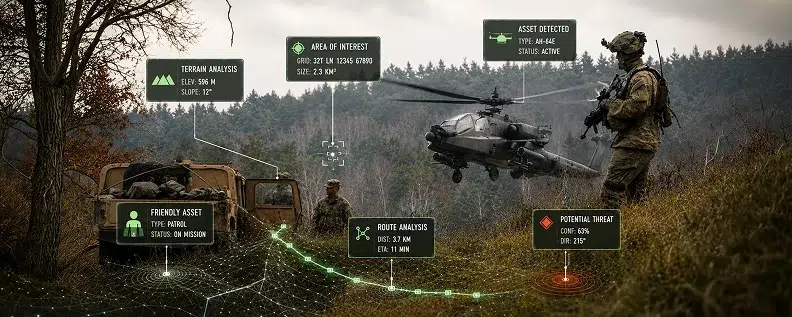
GPU-accelerated platforms enable real-time sensor fusion, allowing commanders and operators to identify patterns, detect anomalies, and prioritize threats more effectively.
Instead of reviewing separate data streams independently, personnel can receive a consolidated operational view that supports faster and more informed decision-making.

Deploying advanced AI capabilities in a data center is one thing. Delivering the same capabilities in a tactical environment is another challenge entirely.
Military and expeditionary systems must operate in environments characterized by:
Commercial GPU servers are rarely designed to withstand these conditions.
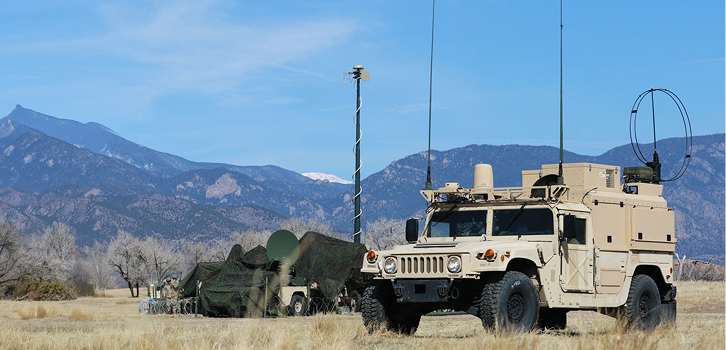
Rugged GPU platforms are engineered specifically for deployed operations, combining high-performance computing with environmental durability. This allows advanced AI workloads to operate reliably in edge environments, tactical operations centers, expeditionary vehicles, forward operating bases, and other mission-critical environments.

Military leaders often reference the OODA Loop – Observe, Orient, Decide, and Act – as a framework for maintaining operational advantage.
The speed and accuracy of this cycle directly influence mission success.
GPU-powered AI systems support every stage of the OODA process:
Observe
Collect and ingest data from multiple sensors and operational systems.
Orient
Correlate information, identify patterns, and generate situational awareness.
Decide
Provide commanders with AI-assisted insights and decision support.
Act
Enable rapid response through timely dissemination of intelligence and operational directives

By reducing the time required to move from observation to action, rugged GPU platforms help organizations maintain decision superiority in dynamic environments.
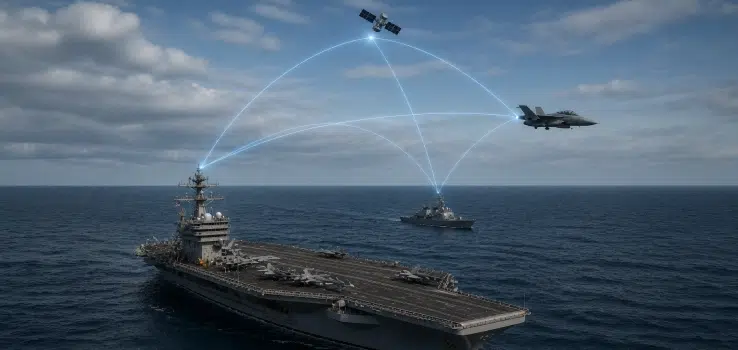
Modern defense strategies increasingly emphasize Multi-Domain Operations (MDO), requiring coordination across land, sea, air, space, and cyber domains.
Success depends on the ability to rapidly collect, process, and share information across a variety of systems and operational environments.
Rugged GPU platforms serve as a foundational technology for these architectures by:
As military systems become more connected and data-driven, edge-based GPU computing becomes essential to maintaining operational effectiveness.
The ATMOS2 GPU was developed to address the growing demand for ruggedized AI and high-performance computing at the edge.
Designed to support the U.S. Army Command and Control – Now (C2NOW) program, this rugged edge node combines powerful GPU acceleration with a compact, mission-ready architecture.
Key capabilities include:
By enabling advanced AI applications directly where data is generated, the ATMOS2 GPU helps organizations transform raw information into actionable intelligence faster than ever before.

The volume of operational data will continue to grow as new sensors, autonomous platforms, and mission systems are fielded across the battlespace.
Organizations that can rapidly process, analyze, and act on that information will gain a significant operational advantage.
Rugged GPU platforms are no longer simply high-performance computing devices, they have become the engines of modern Command and Control computing.
By bringing AI-powered intelligence to the tactical edge, systems like the ATMOS2 GPU help commanders make faster decisions, improve situational awareness, and maintain mission effectiveness in the world’s most demanding environments.