Blog
Engineering NGC2 Computing for Extreme Heat

When the Edge Gets Hot: Why Thermal Resilience Matters for NGC2 Computing
The tactical edge has a heat problem. As the Army pushes more compute, data, AI and applications down echelon through Next Generation Command and Control (NGC2), the hardware supporting those capabilities is moving farther away from controlled data-center conditions and deeper into environments where heat, dust, solar exposure and sustained workloads are part of everyday operation. This requires next-level hardware for extreme NGC2 Computing.
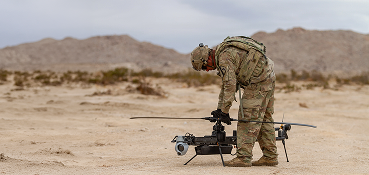
Project Convergence-Capstone 6 (PC-C6) made that challenge especially visible. During the Army’s division-scale NGC2 experimentation at Fort Irwin, California, systems operated through intense Mojave Desert heat. Army leaders described the environment as an opportunity to stress the full NGC2 stack under realistic conditions.

The Desert Exposed the Gap
NGC2 is designed to connect applications, data, AI, infrastructure and communications across Army formations. According to the Army, the architecture is intended to support modern warfighting applications and AI from Soldier to Corps while providing resilient communications across greater distances.
That requires physical infrastructure somewhere in the chain to process, store and move all that information.
At PC-C6, roughly 10,000 soldiers operated in the Mojave Desert while testing more than 90 technologies. It was reported that some hardware overheated and some equipment experienced connectivity problems. Maj. Gen. Patrick Ellis, then commander of the 4th Infantry Division, specifically identified heat tolerance as one of the shortcomings exposed during the exercise.
A computing system can perform well in controlled testing and encounter a very different engineering problem when placed inside a vehicle, exposed to direct sunlight and asked to sustain demanding workloads in extreme ambient temperatures. At the edge, the environment becomes part of the workload.

Heat Is a Combined System Load
Thermal stress doesn’t come from a single source. A tactical computer may simultaneously face high ambient temperature, direct solar exposure and heat generated internally by processors, GPUs, storage and power electronics.
As ambient temperature increases, the difference between the temperature of the electronics and the surrounding air decreases. That leaves less thermal margin for moving internally generated heat out of the system.
Meanwhile, modern edge workloads can be demanding. AI inference, sensor processing, analytics and other compute-intensive applications can place sustained loads on CPUs and GPUs.
The challenge therefore isn’t simply keeping the hardware cool enough to turn on. It is maintaining useful performance while the environment and workload are both applying thermal pressure.
Survival Is Not the Same as Performance
This distinction is important when evaluating rugged computing. A system remaining powered on at a specified temperature does not necessarily mean it can deliver the same level of performance throughout that operating range.
Modern processors protect themselves from excessive temperatures by reducing performance when necessary. This thermal throttling is useful (it prevents damage) but it can also reduce available computing capability precisely when workloads remain demanding. At the tactical edge, the more useful question becomes: How much performance remains available as thermal stress increases?

That question changes how rugged computing should be evaluated. Peak CPU specifications, GPU capability, memory and storage still matter. But so does the thermal architecture that allows those components to sustain useful output when the surrounding environment becomes hostile.
The real specification isn’t simply maximum performance. It’s available performance under mission conditions.
Moving Heat Out of the System
Every watt consumed by a computing system eventually becomes heat that needs somewhere to go. That creates a thermal path: Heat Generation → Heat Transfer → Heat Rejection
Processors, GPUs, storage and power components generate heat. Internal interfaces, chassis materials and airflow move that heat through the system. The exterior of the platform ultimately has to reject it into the surrounding environment.

Weakness anywhere along that path can affect the entire system. This is why thermal resilience can’t be considered separately from mechanical design. Component placement, chassis construction, cooling architecture and airflow all influence how effectively a platform handles sustained workloads.
Tactical systems also add another constraint: size. The Army’s broader modernization efforts emphasize smaller, lighter and faster-deploying infrastructure. In recent NGC2 fielding, Army personnel have specifically described reducing equipment size and setup time as important to mobility and survivability.
That creates an engineering tension. More computing capability generates more heat. Smaller systems provide less physical space to manage it. And the environment surrounding those systems may already be extremely hot.
Solving all three simultaneously requires thermal design to be considered from the beginning.
Design for the Expected
Extreme heat shouldn’t be treated as an unusual failure scenario when equipment is intended for desert operations. It should be part of the expected operating environment.

PC-C6 demonstrated the value of that approach. Army leaders characterized the event as a way to expose systems to realistic, harsh conditions and identify friction before wider fielding. The Army subsequently announced plans to scale NGC2 capabilities across additional formations.
For organizations evaluating tactical edge infrastructure, that suggests looking beyond a component specification sheet.
Ask how the complete configuration performs:
These questions become increasingly important as more capability moves down echelon.

Engineering the Physical Edge
Extreme heat shouldn’t be treated as an unusual failure scenario when equipment is intended for desert operations. It should be part of the expected operating environment.
This is also where purpose-built rugged computing differs from simply adapting commercial hardware for field use.
Platforms such as the Core Systems ATMOS2 Series approach compute, networking, power and thermal management as parts of the same deployable system. The objective is not merely to protect electronics from the environment, but to maintain useful computing capability when environmental and workload demands occur simultaneously.

That distinction becomes more important as AI and other compute-intensive applications move closer to sensors and tactical users.
More processing at the edge can reduce reliance on distant infrastructure and make applications available closer to the mission—but only when the hardware underneath those applications can continue supporting them.
Heat Changes the Equation
NGC2 is a digital transformation operating in a very physical world. Fort Irwin provided a useful reminder: extreme heat can expose limitations that aren’t apparent in controlled environments. PC-C6 experienced overheating across some hardware, while Army leaders emphasized that identifying those friction points was part of the purpose of the exercise.
As more compute moves toward the tactical edge, thermal resilience should be considered alongside processing power, networking and storage.
Because the objective isn’t simply to build a computer that survives the heat. It’s to ensure the mission still has the computing capability it needs when conditions peak.